Hydration2 min read
Water in a hot city
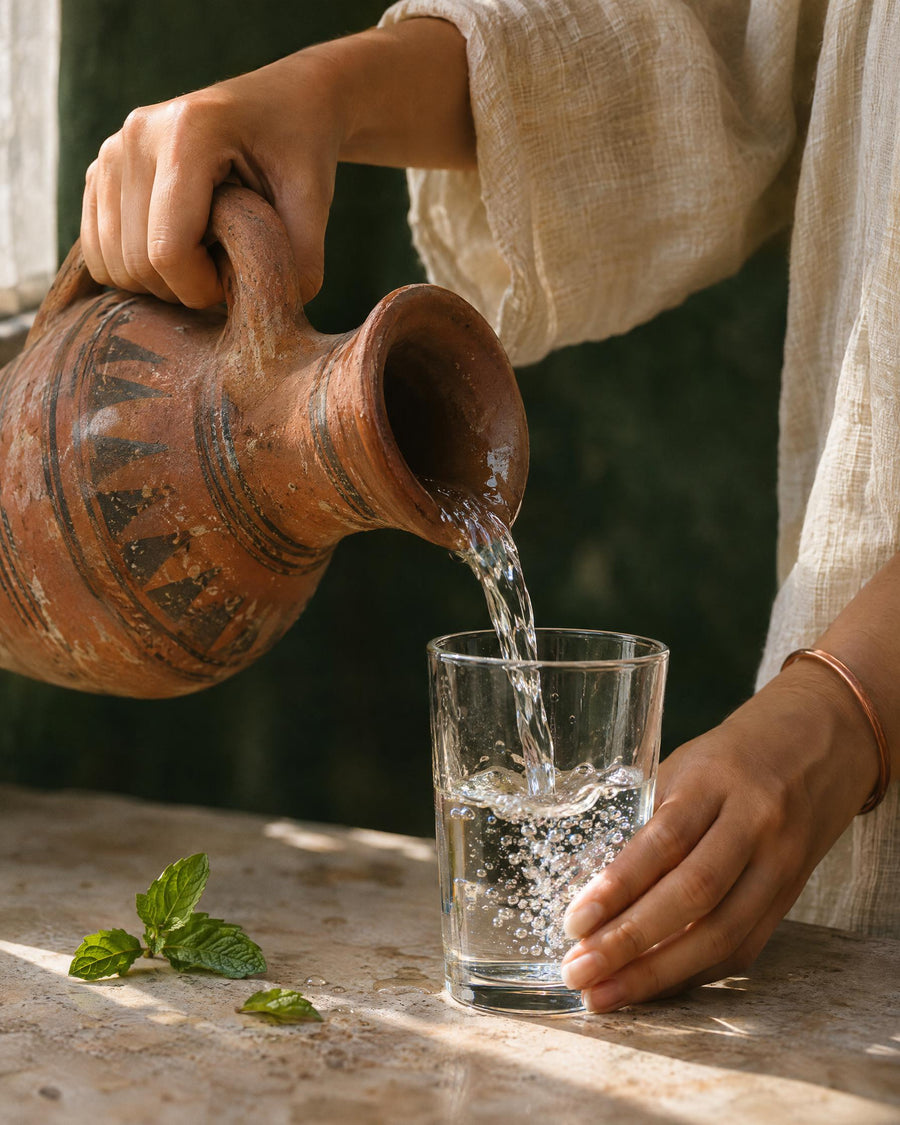
Cairo’s heat asks more of your body than you might notice. You don’t need an app or a number to chase. A few easy habits and a little attention do most of the work.
There is no magic number
How much water you need depends on the heat, how active you are, your body size and what you eat. Fruit, vegetables, soup, milk and tea all count towards your fluids too. So instead of a fixed target, use two simple cues: drink when you are thirsty, and glance at the colour of your urine. Pale yellow usually means you are doing fine. Darker usually means you could drink a little more.
Hang it on your day
Habits stick when they are attached to things you already do. A glass when you wake up. A glass with each meal. A bottle in your bag or on your desk, where you can see it. Sipping through the day is much easier than catching up at night.
When summer arrives
You sweat more in the hot months, often without noticing: walking to the metro, sitting in a car without air conditioning, standing in the kitchen. On very hot days, drink a little more than thirst suggests, especially if you are outdoors. Keep an eye on children and older relatives, who may not notice thirst or mention it.
Moving and sweating
Have some water before you exercise, sip during longer sessions, and drink again afterwards.
In Ramadan
Spread your water between iftar and suhoor instead of drinking it all at once. Start iftar with water, keep a bottle near you through the evening, and drink at suhoor. Very salty food can leave you thirstier the next day, and a lot of coffee or strong tea late at night can disturb your sleep, so go easy on both.
If you have a kidney or heart condition, or you are pregnant, your needs can be different, so follow your doctor’s advice.
General wellbeing information, not medical advice.